Yellow Alert vs Red Alert: What Grid Alerts Mean for Your Home
Quick answer
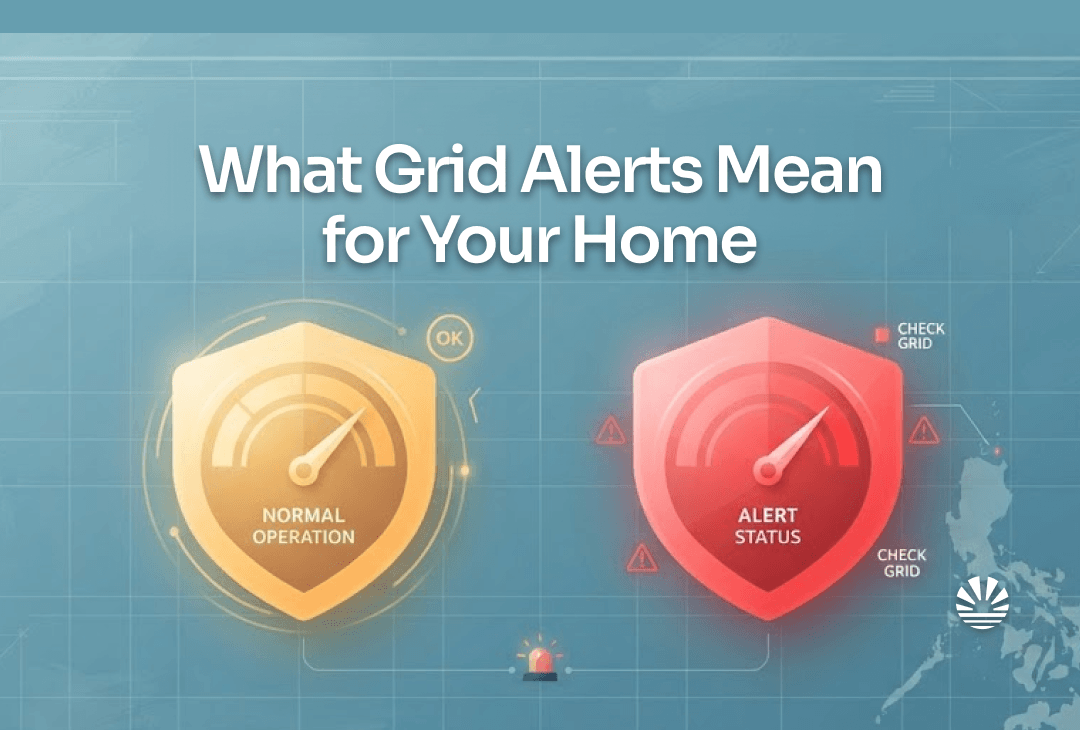
A yellow alert means the Luzon grid has less spare capacity than it needs to handle a sudden plant outage. A red alert means power supply is not enough to meet demand, which can lead to rotating brownouts called manual load dropping. In May 2026, Luzon was on red alert for three straight days during the summer heat.
Key takeaways
- The National Grid Corporation of the Philippines (NGCP) issues grid alerts when power supply gets tight.
- A yellow alert means spare capacity is below what the grid needs for a sudden plant outage; a red alert means supply can't meet demand.
- Red alerts can lead to manual load dropping, which means rotating brownouts.
- Luzon was on red alert from May 13 to 15, 2026, and a hybrid solar system with a battery can keep essentials running during such outages.
Every summer, news reports warn that the Luzon grid is on yellow or red alert. Here's what those alerts mean, why they happen, and how to prepare your home.
Who Issues Grid Alerts?
Grid alerts come from the National Grid Corporation of the Philippines (NGCP).
NGCP operates the country's high-voltage transmission grid. It issues alerts when the supply of electricity gets too close to, or falls below, what consumers need.
What a Yellow Alert Means
A yellow alert means the grid is running with a thin safety cushion.
The grid keeps spare capacity in reserve in case a large power plant suddenly breaks down. Under a yellow alert, that spare capacity is below what the grid needs. Power is still flowing normally, but there's less room for problems.
What a Red Alert Means
A red alert means power supply is not enough to meet demand.
When supply falls short, the grid can't keep up with what homes and businesses are using and still keep its required reserve. To protect the whole system, the grid operator may ask utilities to cut power to some areas.
What Is Manual Load Dropping?
Manual load dropping is a controlled, rotating brownout.
Utilities switch off power to different areas in turns so the grid doesn't collapse over a wider area. That's why neighboring barangays can lose power at different times on the same day.
What Happened in May 2026
Luzon was on red alert for three straight days, from May 13 to 15, 2026.
On May 14, NGCP expected available capacity of about 12,479 megawatts against peak demand of about 12,595 megawatts, according to the Philippine News Agency. NGCP said 17 plants had been on forced outage since March and 14 were running at reduced capacity. On May 13, rotating brownouts left almost a million homes without power, according to the Philippine Daily Inquirer.
Why Alerts Happen Most in Summer
Alerts are most common in the hot, dry months of March to May.
Heat drives up aircon and electric fan use, which pushes demand to its highest levels of the year. When plants break down or run below capacity at the same time, supply can't keep up.
How to Prepare Your Home
A few simple steps reduce the impact of rotating brownouts.
- Follow advisories from NGCP and your electric utility.
- Cut back on heavy appliances during the alert hours listed in the advisory.
- Keep phones, power banks and rechargeable lights charged.
- Unplug sensitive electronics during outages to protect them when power returns.
- Consider backup power for the appliances you can't do without.
How Solar Can Help
A hybrid solar system with a battery keeps your essentials running during rotating brownouts.
A grid-tie system without a battery shuts off during any outage for safety, so it won't help during a brownout. Learn why in Does Solar Work During a Brownout?, and compare system types in Hybrid vs Grid-Tie Solar.
If brownouts are affecting your home or business, request a free site assessment.
Sources: NGCP grid advisories as reported by the Philippine News Agency, GMA News and the Philippine Daily Inquirer.