LiFePO4 vs Lead-Acid Batteries for Solar: Which Is Better?
Quick answer
For most home solar systems, LiFePO4 (lithium iron phosphate) batteries are the better long-term choice. They let you use more of their capacity, last for many more charge cycles and need almost no maintenance. Lead-acid batteries cost less upfront but wear out sooner, especially when drained deeply every day. Always compare the cycle rating and warranty on the datasheet.
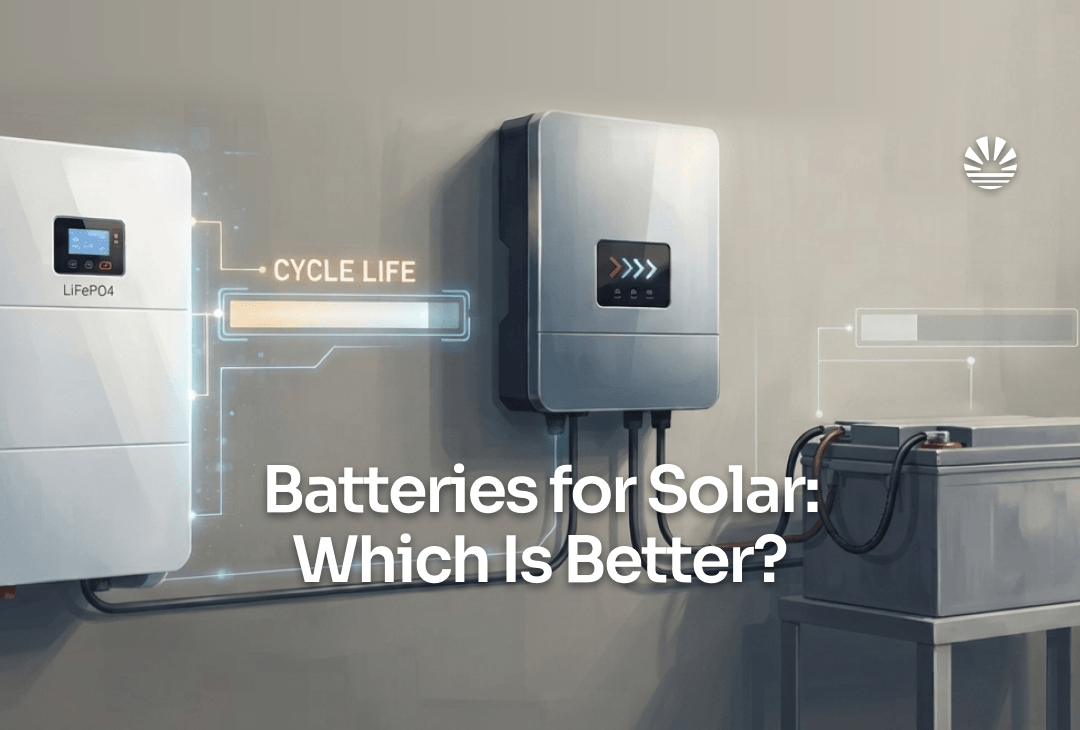
Key takeaways
- LiFePO4 batteries let you use more of their capacity and last many more cycles than lead-acid batteries.
- Lead-acid costs less upfront but wears out faster when drained deeply every day.
- Heat shortens the life of every battery, so install yours in a shaded, ventilated spot.
- Compare usable capacity, cycle rating, warranty and inverter compatibility on the datasheet before buying.
If you're adding a battery to your solar system, you'll likely choose between two types: LiFePO4 (lithium iron phosphate) and lead-acid. They work very differently, and the right choice affects how long your battery lasts and how much of it you can actually use.
Three Battery Terms to Know First
These terms appear on every battery datasheet.
- Depth of discharge (DoD): how much of the battery's capacity you use before recharging. A battery that can handle deep discharge gives you more usable energy.
- Cycle life: how many full charge and discharge cycles the battery can handle before its capacity drops to a set level stated by the manufacturer.
- C-rate: how fast the battery can safely charge or discharge compared with its size.
LiFePO4 Batteries
LiFePO4 is the most common battery chemistry in modern home solar systems.
It is one of the most stable lithium chemistries. LiFePO4 batteries handle deep discharge well, are rated for far more cycles than lead-acid, and need almost no routine maintenance. Most come with a built-in battery management system (BMS) that protects the cells. They are also lighter and more compact. The trade-off is a higher upfront cost.
Lead-Acid Batteries
Lead-acid is the older, familiar technology, similar to a car battery.
It costs less upfront, but its recommended depth of discharge is shallower, so you can use less of its capacity each day without shortening its life. Lead-acid batteries are rated for fewer cycles and are heavier. Flooded lead-acid batteries need regular water top-ups and good ventilation, while sealed types need less upkeep.
Side-by-Side Comparison
Here's how the two compare for a home hybrid system:
- Usable capacity: LiFePO4 lets you use more of its rated capacity.
- Cycle life: LiFePO4 is rated for many more cycles.
- Maintenance: LiFePO4 needs almost none; flooded lead-acid needs regular care.
- Upfront cost: lead-acid is lower.
- Weight and size: LiFePO4 is lighter and more compact.
- Long-term value: LiFePO4 usually comes out ahead when the battery is used every day.
When Lead-Acid Might Still Make Sense
Lead-acid can work when the battery is rarely used.
If your battery is only for occasional brownouts and sits fully charged most of the time, or your budget is very tight, lead-acid may be enough. For daily use, it usually needs replacing much sooner.
Heat Shortens Every Battery's Life
Temperature affects both types.
Install your battery in a shaded, ventilated spot within the manufacturer's recommended temperature range. Avoid direct sun, hot roof spaces and enclosed areas with no airflow.
Safety and Certifications
A battery stores a lot of energy, so safety matters.
For lithium batteries, look for certification to IEC 62619, a safety standard for lithium batteries. Have the battery installed by trained technicians with correctly sized cables, fuses and breakers, away from flammable materials.
How to Compare Batteries Before Buying
Check these on the datasheet:
- Usable capacity in kWh
- Recommended depth of discharge
- Cycle rating and the capacity left at the end of it
- Warranty length and conditions
- Operating temperature range
- Compatibility with your inverter
Not sure if you need a battery at all? Read Hybrid vs Grid-Tie Solar and Does Solar Work During a Brownout?, or request a free site assessment.